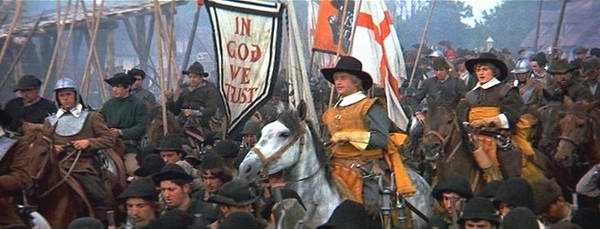
I touched on this subject a little under a year ago in a separate post. However I'd like to take a look at what Westminster has to say about it.
DIRECTIONS OF THE GENERAL ASSEMBLY,CONCERNING SECRET AND PRIVATE WORSHIP, AND MUTUAL EDIFICATION; FOR CHERISHING PIETY, FOR MAINTAINING UNITY, AND AVOIDING SCHISM AND DIVISION.
BESIDES the publick worship in congregations, mercifully established in this land in great purity, it is expedient and necessary that secret worship of each person alone, and private worship of families, be pressed and set up; that, with national reformation, the profession and power of godliness, both personal and domestick, be advanced.
I. And first, for secret worship, it is most necessary, that every one apart, and by themselves, be given to prayer and meditation, the unspeakable benefit whereof is best known to them who are most exercised therein; this being the mean whereby, in a special way, communion with God is entertained, and right preparation for all other duties obtained: and therefore it becometh not only pastors, within their several charges, to press persons of all sorts to perform this duty morning and evening, and at other occasions; but also it is incumbent to the head of every family to have a care, that both themselves, and all within their charge, be daily diligent herein.
II. The ordinary duties comprehended under the exercise of piety which should be in families, when they are convened to that effect, are these: First, Prayer and praises performed with a special reference, as well to the publick condition of the kirk of God and this kingdom, as to the present case of the family, and every member thereof. Next, Reading of the scriptures, with catechising in a plain way, that the understandings of the simpler may be the better enabled to profit under the publick ordinances, and they made more capable to understand the scriptures when they are read; together with godly conferences tending to the edification of all the members in the most holy faith: as also, admonition and rebuke, upon just reasons, from those who have authority in the family.
III. As the charge and office of interpreting the holy scriptures is a part of the ministerial calling, which none (however otherwise qualified) should take upon him in any place, but he that is duly called thereunto by God and his kirk; so in every family where there is any that can read, the holy scriptures should be read ordinarily to the family; and it is commendable, that thereafter they confer, and by way of conference make some good use of what hath been read and heard. As, for example, if any sin be reproved in the word read, use may be made thereof to make all the family circumspect and watchful against the same; or if any judgment be threatened, or mentioned to have been inflicted, in that portion of scripture which is read, use may be made to make all the family fear lest the same or a worse judgment befall them, unless they beware of the sin that procured it: and, finally, if any duty be required, or comfort held forth in a promise, use may be made to stir up themselves to employ Christ for strength to enable them for doing the commanded duty, and to apply the offered comfort. In all which the master of the family is to have the chief hand; and any member of the family may propone a question or doubt for resolution.
IV. The head of the family is to take care that none of the family withdraw himself from any part of family-worship: and, seeing the ordinary performance of all the parts of family-worship belongeth properly to the head of the family, the minister is to stir up such as are lazy, and train up such as are weak, to a fitness to these exercises; it being always free to persons of quality to entertain one approved by the presbytery for performing family-exercise. And in other families, where the head of the family is unfit, that another, constantly residing in the family, approved by the minister and session, may be employed in that service, wherein the minister and session are to be countable to the presbytery. And if a minister, by divine Providence, be brought to any family, it is requisite that at no time he convene a part of the family for worship, secluding the rest, except in singular cases especially concerning these parties, which (in Christian prudence) need not, or ought not, to be imparted to others.
V. Let no idler, who hath no particular calling, or vagrant person under pretence of a calling, be suffered to perform worship in families, to or for the same; seeing persons tainted with errors, or aiming at division, may be ready (after that manner) to creep into houses, and lead captive silly and unstable souls.
VI. At family-worship, a special care is to be had that each family keep by themselves; neither requiring, inviting, nor admitting persons from divers families, unless it be those who are lodged with them, or at meals, or otherwise with them upon some lawful occasion.
VII. Whatsoever have been the effects and fruits of meetings of persons of divers families in the times of corruption or trouble, (in which cases many things are commendable, which otherwise are not tolerable,) yet, when God hath blessed us with peace and purity of the gospel, such meetings of persons of divers families (except in cases mentioned in these Directions) are to be disapproved, as tending to the hinderance of the religious exercise of each family by itself, to the prejudice of the publick ministry, to the rending of the families of particular congregations, and (in progress of time) of the whole kirk. Besides many offences which may come thereby, to the hardening of the hearts of carnal men, and grief of the godly.
VIII. On the Lord's day, after every one of the family apart, and the whole family together, have sought the Lord (in whose hands the preparation of men's hearts are) to fit them for the publick worship, and to bless to them the publick ordinances, the master of the family ought to take care that all within his charge repair to the publick worship, that he and they may join with the rest of the congregation: and the publick worship being finished, after prayer, he should take an account what they have heard; and thereafter, to spend the rest of the time which they may spare in catechising, and in spiritual conferences upon the word of God: or else (going apart) they ought to apply themselves to reading, meditation, and secret prayer, that they may confirm and increase their communion with God: that so the profit which they found in the publick ordinances may be cherished and promoved, and they more edified unto eternal life.
IX. So many as can conceive prayer, ought to make use of that gift of God; albeit those who are rude and weaker may begin at a set form of prayer, but so as they be not sluggish in stirring up in themselves (according to their daily necessities) the spirit of prayer, which is given to all the children of God in some measure: to which effect, they ought to be more fervent and frequent in secret prayer to God, for enabling of their hearts to conceive, and their tongues to express, convenient desires to God for their family. And, in the meantime, for their greater encouragement, let these materials of prayer be meditated upon, and made use of, as followeth.
"Let them confess to God how unworthy they are to come in his presence, and how unfit to worship his Majesty; and therefore earnestly ask of God the spirit of prayer.
"They are to confess their sins, and the sins of the family; accusing, judging, and condemning themselves for them, till they bring their souls to some measure of true humiliation.
"They are to pour out their souls to God, in the name of Christ, by the Spirit, for forgiveness of sins; for grace to repent, to believe, and to live soberly, righteously, and godly; and that they may serve God with joy and delight, walking before him.
"They are to give thanks to God for his many mercies to his people, and to themselves, and especially for his love in Christ, and for the light of the gospel.
"They are to pray for such particular benefits, spiritual and temporal, as they stand in need of for the time, (whether it be morning or evening,) as anent health or sickness, prosperity or adversity.
"They ought to pray for the kirk of Christ in general, for all the reformed kirks, and for this kirk in particular, and for all that suffer for the name of Christ; for all our superiors, the king's majesty, the queen, and their children; for the magistrates, ministers, and whole body of the congregation whereof they are members, as well for their neighbours absent in their lawful affairs, as for those that are at home.
"The prayer may be closed with an earnest desire that God may be glorified in the coming of the kingdom of his Son, and in doing of his will, and with assurance that themselves are accepted, and what they have asked according to his will shall be done."
X. These exercises ought to be performed in great sincerity, without delay, laying aside all exercises of worldly business or hinderances, not withstanding the mockings of atheists and profane men; in respect of the great mercies of God to this land, and of his severe corrections wherewith lately he hath exercised us. And, to this effect, persons of eminency (and all elders of the kirk) not only ought to stir up themselves and families to diligence herein, but also to concur effectually, that in all other families, where they have power and charge, the said exercises be conscionably performed.
XI. Besides the ordinary duties in families, which are above mentioned, extraordinary duties, both of humiliation and thanksgiving, are to be carefully performed in families, when the Lord, by extraordinary occasions, (private or publick,) calleth for them.
XII. Seeing the word of God requireth that we should consider one another, to provoke unto love and good works; therefore, at all times, and specially in this time, wherein profanity abounds, and mockers, walking after their own lusts, think it strange that others run not with them to the same excess of riot; every member of this kirk ought to stir up themselves, and one another, to the duties of mutual edification, by instruction, admonition, rebuke; exhorting one another to manifest the grace of God in denying ungodliness and worldly lusts, and in living godly, soberly and righteously in this present world; by comforting the feeble-minded, and praying with or for one another. Which duties respectively are to be performed upon special occasions offered by Divine Providence; as, namely, when under any calamity, cross, or great difficulty, counsel or comfort is sought; or when an offender is to be reclaimed by private admonition, and if that be not effectual, by joining one or two more in the admonition, according to the rule of Christ, that in the mouth of two or three witnesses every word may be established.
XIII. And, because it is not given to every one to speak a word in season to a wearied or distressed conscience, it is expedient, that a person (in that case,) finding no ease, after the use of all ordinary means, private and publick, have their address to their own pastor, or some experienced Christian: but if the person troubled in conscience be of that condition, or of that sex, that discretion, modesty, or fear of scandal, requireth a godly, grave, and secret friend to be present with them in their said address, it is expedient that such a friend be present.
XIV. When persons of divers families are brought together by Divine Providence, being abroad upon their particular vocations, or any necessary occasions; as they would have the Lord their God with them whithersoever they go, they ought to walk with God, and not neglect the duties of prayer and thanksgiving, but take care that the same be performed by such as the company shall judge fittest. And that they likewise take heed that no corrupt communication proceed out of their mouths, but that which is good, to the use of edifying, that it may minister grace to the hearers.
The drift and scope of all these Directions is no other, but that, upon the one part, the power and practice of godliness, amongst all the ministers and members of this kirk, according to their several places and vocations, may be cherished and advanced, and all impiety and mocking of religious exercises suppressed: and, upon the other part, that, under the name and pretext of religious exercises, no such meetings or practices be allowed, as are apt to breed error, scandal, schism, contempt, or misregard of the publick ordinances and ministers, or neglect of the duties of particular callings, or such other evils as are the works, not of the Spirit, but of the flesh, and are contrary to truth and peace.
A. Ker.
Showing posts with label Westminster Confession. Show all posts
Showing posts with label Westminster Confession. Show all posts
Thursday, April 24, 2008


Tuesday, April 15, 2008
A Nice Little Controversial Post
With all the hoopla surrounding the visit of Pope Benedict XVI to America and all the words I hear in Reformed and Evangelical circles of "being glad the Pope is Catholic again" I wonder how many of us Reformed and Evangelical folk would be willing to agree with the 25th Chapter of the WCF where it says:
VI. There is no other head of the Church but the Lord Jesus Christ. Nor can the Pope of Rome, in any sense, be head thereof; but is that Antichrist, that man of sin, and son of perdition, that exalts himself, in the Church, against Christ and all that is called God.Well I do. What say you?
Thursday, April 10, 2008
The Insufficiency of a Mainline Seminary
Rod Stewart sung a song that he placed on an album ca.1998 by the name of "Ooh La La", (This rendition is with The Corrs, who are awesome by the way) which contains the eminently applicable phrase "I wish that I knew what I know now when I was younger...". Well I think I can say with confidence this is utterly true of my choice of Seminary. Now friends of PTS do not take what I am about to say the wrong way for this is not directly a critique of your own journey but certainly a self-critique and the issues I bring up you may want to take a look at yourself from your own perspective (wow that sounds Pomo). However with that all said I want to give a little background to this conversation. First I came to this Seminary for all the wrong reasons. I came thinking that the purpose of Seminary was primarily to prepare me for the work of the Pastorate and to develop an academic mind that could withstand the rigors of unbelief and fulfill the challenge of Peter to the aliens scattered throughout Pontus, Galatia, Cappadocia, Asia, and Bithynia in the face of persecution and questioning to be able to:
Catch my drift?
Today as part of our "Church and Society: Local" course (which I think has been very beneficial) we went and visited the Allegheny County Jail to meet and listen to inmates who work through a chaplain's program while incarcerated. Through the words of these unlearned prisoners I heard the doctrines of Providence, Total Depravity, Assurance, 3 Works of the Law, Justification, and Perseverance (and gasp!!! Innerency!!!) elucidated in a way I have never heard from a Ph.D. at Pittsburgh Seminary. I heard men beaten by life speak the Gospel as if it were REAL!!! As if it was truly transformational and life-changing. I was asked recently by a friend if I thought there were unconverted people in the room with me as I sit through classes at PTS and I sadly answered with a yes, thinking only the words of Christ in Matthew 7:21-23 and what the Confession speaks in Chapter 10, Section 4 which says:
...always being ready to make a defense to everyone who asks you to give an account for the hope that is in you, yet with gentleness and reverence... -- 1 Peter 3:15However what this mainline Seminary has done is provide plenty of questions without supplying any semblance of an answer to its students, it has made the mortal mistake of believing that its students come here already "converted" to the Gospel and that it is the duty of the local church and the student's own studies (which I agree should be true) to have an a priori knowledge of this hope that Peter speaks. In other words it is not the mission of the seminary to prepare the students to preach the Gospel (and to teach what that Gospel is) but to preach of the "Gospel" to an already converted congregation. There is no focus in our primary coursework on reaching the lost, directing the equipping of the Saints, or expositing the Word of God to the People of God. Only on how to deconstruct the Word of God, skim over the ignorance of those who came before, wisely plucking the wheat from the chaff nary an eye shall see the "Pastoral Heart" of Westminster, the Puritans, or even the late John Gerstner who taught at this institution less than a generation ago.
Catch my drift?
Today as part of our "Church and Society: Local" course (which I think has been very beneficial) we went and visited the Allegheny County Jail to meet and listen to inmates who work through a chaplain's program while incarcerated. Through the words of these unlearned prisoners I heard the doctrines of Providence, Total Depravity, Assurance, 3 Works of the Law, Justification, and Perseverance (and gasp!!! Innerency!!!) elucidated in a way I have never heard from a Ph.D. at Pittsburgh Seminary. I heard men beaten by life speak the Gospel as if it were REAL!!! As if it was truly transformational and life-changing. I was asked recently by a friend if I thought there were unconverted people in the room with me as I sit through classes at PTS and I sadly answered with a yes, thinking only the words of Christ in Matthew 7:21-23 and what the Confession speaks in Chapter 10, Section 4 which says:
IV. Others not elected, although they may be called by the ministry of the word,p and may have some common operations of the Spirit,q yet they never truly come unto Christ, and therefore cannot be saved:r much less can men not professing the Christian religion be saved in any other way whatsoever, be they ever so diligent to frame their lives according to the light of nature, and the law of that religion they do profess;s and to assert and maintain that they may, is very pernicious, and to be detested.t
p Matt. 22:14.
q Matt. 7:22; Matt. 13:20-21; Heb. 6:4-5.
r John 6:64-66; John 8:24.
s Acts 4:12; John 14:6; Eph. 2:12; John 4:22; John 17:3.
t II John 9-11; I Cor. 16:22; Gal. 1:6-8.
Thursday, March 13, 2008
READ YOUR WESTMINSTER CONFESSION!!!!!!!
Read it carefully and with purpose and you may just find things in there that will blow your mind and show you how off the deep end theologically the PC(USA) has gone away from even a modicum of respectability concerning its own confessional statements.
That is all.
That is all.
Friday, February 29, 2008
Westminster Assembly Project
Website worth your time:
Westminster Assembly Project
The Westminster Assembly Project exists to make the writings of the Westminster Assembly and its members available to scholars and to the general public. It is the umbrella title for several subprojects, one of which seeks to publish the minutes and papers of the Westminster Assembly. We hope that as this site develops it will prove useful for researchers focusing on Puritanism, the English civil-war, post-Reformation theology, or the history of Presbyterianism and Congregationalism.
Westminster Assembly Project
The Westminster Assembly Project exists to make the writings of the Westminster Assembly and its members available to scholars and to the general public. It is the umbrella title for several subprojects, one of which seeks to publish the minutes and papers of the Westminster Assembly. We hope that as this site develops it will prove useful for researchers focusing on Puritanism, the English civil-war, post-Reformation theology, or the history of Presbyterianism and Congregationalism.
Wednesday, February 20, 2008
Observance of the Christian Sabbath for the Reformed Christian
The Sabbath is quite sticky wicket today for many on the Reformed side of the fence. In the not too distant past it was pretty common and expected in Reformed circles that one would observe the first day of the week alone as Sabbath, but today many have either ignored the traditions expectation or just flat out disregarded it as an acquiesce to pagan culture. We'll look first at how Westminster defines the Sabbath to show what our Confessions teach. Then look at a couple comments from Church leaders and theologians.
Westminster Confession of Faith, Chapter 21, "Of Religious Worship, and the Sabbath Day". Section 7-8 reads:
Westminster Confession of Faith, Chapter 21, "Of Religious Worship, and the Sabbath Day". Section 7-8 reads:
- 7. As it is the law of nature, that, in general, a due proportion of time be set apart for the worship of God; so, in his Word, by a positive, moral, and perpetual commandment binding all men in all ages, he hath particularly appointed one day in seven, for a Sabbath, to be kept holy unto him: which, from the beginning of the world to the resurrection of Christ, was the last day of the week; and, from the resurrection of Christ, was changed into the first day of the week, which, in Scripture, is called the Lord’s day, and is to be continued to the end of the world, as the Christian Sabbath.
- 8. This Sabbath is then kept holy unto the Lord, when men, after a due preparing of their hearts, and ordering of their common affairs beforehand, do not only observe a holy rest, all the day, from their own works, words, and thoughts about their worldly employments and recreations, but also are taken up, the whole time, in the public and private exercises of his worship, and in the duties of necessity and mercy.
"I am obliged to dwell a little longer on this, because some restless spirits are now making an outcry about the observance of the Lord’s day. They complain that Christian people are trained in Judaism, because some observance of days is retained. My reply is, That those days are observed by us without Judaism, because in this matter we differ widely from the Jews. We do not celebrate it with the most minute formality, as a ceremony by which we imagine that a spiritual mystery is typified, but we adopt it as a necessary remedy for preserving order in the church. Paul informs us that Christians are not to be judged in respect of its observance, because it is a shadow of something to come, (Col. 2:16); and, accordingly, he expresses a fear lest his labour among the Galatians should prove in vain, because they still observed days, (Gal. 4:10,11). And he tells the Romans that it is superstitious to make one day differ from another, (Rom. 14:5). But who, except those restless men, does not see what the observance is to which the Apostle refers? Those persons had no regard to that politic and ecclesiastical arrangement, but by retaining the days as types of spiritual things, they in so far obscured the glory of Christ, and the light of the Gospel. They did not desist from manual labour on the ground of its interfering with sacred study and meditation, but as a kind of religious observance; because they dreamed that by their cessation from labour, they were cultivating the mysteries which had of old been committed to them. It was, I say, against this preposterous observance of days that the Apostle inveighs, and not against that legitimate selection which is subservient to the peace of Christian society. For in the churches established by him, this was the use for which the Sabbath was retained. He tells the Corinthians to set the first day apart for collecting contributions for the relief of their brethren at Jerusalem, (1 Cor. 16:2). If superstition is dreaded, there was more danger in keeping the Jewish Sabbath than the Lord’s day as Christians now do. It being expedient to overthrow superstition, the Jewish holy day was abolished; and as a thing necessary to retain decency, order, and peace in the church, another day was appointed for that purpose."and
But what about Colossians 2:16? R.L Dabney responds saying:REMEMBER THE SABBATH DAY TO KEEP IT HOLY. SIX DAYS SHALT THOU LABOUR AND DO ALL THY WORK: BUT THE SEVENTH DAY IS THE SABBATH OF THE LORD THY GOD. IN IT THOU SHALT NOT DO ANY WORK, &C.
28. The purport of the commandment is, that being dead to our own affections and works, we meditate on the kingdom of God, and in order to such meditation, have recourse to the means which he has appointed. But as this commandment stands in peculiar circumstances apart from the others, the mode of exposition must be somewhat different. Early Christian writers are wont to call it typical, as containing the external observance of a day which was abolished with the other types on the advent of Christ. This is indeed true; but it leaves the half of the matter untouched. Wherefore, we must look deeper for our exposition, and attend to three cases in which it appears to me that the observance of this commandment consists. First, under the rest of the seventh days the divine Lawgiver meant to furnish the people of Israel with a type of the spiritual rest by which believers were to cease from their own works, and allow God to work in them. Secondly he meant that there should be a stated day on which they should assemble to hear the Law, and perform religious rites, or which, at least, they should specially employ in meditating on his works, and be thereby trained to piety. Thirdly, he meant that servants, and those who lived under the authority of others, should be indulged with a day of rest, and thus have some intermission from labour.
29. We are taught in many passages hat this adumbration of spiritual rest held a primary place in the Sabbath. Indeed, there is no commandment the observance of which the Almighty more strictly enforces. When he would intimate by the Prophets that religion was entirely subverted, he complains that his sabbaths were polluted, violated, not kept, not hallowed; as if, after it was neglected, there remained nothing in which he could be honoured. The observance of it he eulogises in the highest terms, and hence, among other divine privileges, the faithful set an extraordinary value on the revelation of the Sabbath. In Nehemiah, the Levites, in the public assembly, 340thus speak: “Thou madest known unto them thy holy sabbath, and commandedst them precepts, statutes, and laws, by the hand of Moses thy servant.” You see the singular honour which it holds among all the precepts of the Law. All this tends to celebrate the dignity of the mystery, which is most admirably expressed by Moses and Ezekiel. Thus in Exodus: “Verily my sabbaths shall ye keep: for it is a sign between me and you throughout your generations; that ye may know that I am the Lord that does sanctify you. Ye shall keep my sabbath therefore; for it is holy unto you: every one that defileth it shall surely be put to death: for whosoever does any work therein, that soul shall be cut off from among his people. Six days may work be done; but in the seventh is the sabbath of rest, holy to the Lord: whosoever does any work in the sabbath day, he shall surely be put to death. Wherefore the children of Israel shall keep the sabbath, to observe the sabbath throughout their generations, for a perpetual covenant. It is a sign between me and the children of Israel for ever,” (Exodus 31:13–17). Ezekiel is still more full, but the sum of what he says amounts to this: that the sabbath is a sign by which Israel might know that God is their sanctifier. If our sanctification consists in the mortification of our own will, the analogy between the external sign and the thing signified is most appropriate. We must rest entirely, in order that God may work in us; we must resign our own will, yield up our heart, and abandon all the lusts of the flesh. In short, we must desist from all the acts of our own mind, that God working in us, we may rest in him, as the Apostle also teaches (Heb. 3:13; 4:3, 9).
After the new dispensation was set up, the Christians converted from among the Jews had generally combined the worship of Judaism with that of Christianity. They observed the Lord's day, baptism and the Lord's supper, but they also continued to keep the seventh day, circumcision and the passover. Nor was this wrong for them during the transition state. Acts (ch. 21) tells us that the apostle Paul did so himself. But at first it was proposed by then, to enforce this double system on all Gentile Christians as a permanent one. Of this plan we have the full history in Acts 15, where it was rebuked by the apostles and elders at Jerusalem. A certain part of the Jewish Christians, out of which ultimately grew the Ebionite sect, continued, however, to observe the forms of both dispensations, and restless spirits among the churches planted by Paul, which contained both Jewish and Gentile members, continued to make trouble on this point. Some of them conjoined with this Ebionite view the graver heresy of justification by the merit of ritual and ascetic observances, as we see in the Epistles to the Galatians and Colossians. Thus at that day this spectacle was exhibited: In the mixed Christians churches some brethren went to the synagogue on Saturday and to the church on Sunday, keeping both days holy. Other brethren -- Gentiles -- paid no respect to Saturday,and kept only Sunday. Others again -- Jews -- felt bound to keep not only Saturday and Sunday, but all the Jewish sacred times -- the new moons, the paschal, pentecostal and atonement feasts and the sabbatical years. Here was ground of difference and of mutual accusations. This was the mischief to which the apostle had to bring a remedy. We may add that the question about dean and unclean meats was mingled with that about Jewish days. Was it right now for any Jewish Christians to do as the Gentile Christians did -- use bacon, lard, and the butcher's meat of animals which had been killed at pagan altars?Well this ought to give us a good place to start. I will post some more regarding this subject the rest of the week.
Now, let us see the divine truth and wisdom with which the apostle settles the disputes. One thing which he enjoins (at the end of Rom. 14) is, that whether any man's light is wholly correct or not, he must act conscientiously. He must not do the things which honestly seemed to him wrong, for if he did there was sin, the sin of outraging his own conscience, even though his scruple turned out to be a mistake. Then, first of all, let everybody act conscientiously. He tells them, secondly (Rom. 14:3, 4), not to be censorious, but to respect each other's conscientious convictions, even when they seemed groundless. For there is no positive sin in itself in letting alone bacon, for instance, or stopping work on Saturday; and if a brother's mind is under error as to the duty of doing so, he deserves our respect at least for conscientiously denying himself in these things. But, third, when the apostle saw some professed Christians teaching that a man should make self-righteous merit by continuing to burden himself with the Jewish new-moons, sabbaths, fasts, annual passover feasts and sabbatical years, after the obligation of them in fact was repealed he confessed that this alarmed him (Gal. 4:11), and made him fed as though all his trouble in preaching salvation by free grace to them was to go for nothing. For this idea of making merit by observing self-imposed ceremonies and troublesome rites was entirely a different matter from those other conscientious mistakes, and it involved the very poison of will-worship and self-righteousness. Hence (Col. 2:16 to end) he expressly and solemnly condemns it all. This never had been the gospel, either under the Old Testament or the New. To appoint the means of grace for his people, this was God's part. As long as any ordinance was commanded by him, our part was to make use of it, humbly and faithfully, as a means of grace, in order to strengthen the faith and repentance which bring us to the Saviour. But the moment any man undertook to build up his self-righteousness on will-worship he was under a soul-destroying error, which must not be tolerated one moment. Hence the apostle commands that these Jewish holy days, feasts and fasts, are not to be enforced on anybody; and he explains that they were no longer binding, because that new dispensation of which they were shadows or types had now come with its own divinely-appointed ordinances, and taken the place of others. He did not design to be understood as speaking at all of the Lord's day, which is one of these New Testament ordinances. He means only the Jewish holy days. Does not the consistency of this view with itself and the Scriptures show that it is the true one?
But some one may rejoin that he was speaking of the Lord's day also, because he says (Col. 2:16), "Let no man, therefore, judge you in respect of a holy day, or of the new-moon, or of the sabbath days." This objector is under a delusion. The word "Sabbath" is never applied by a New Testament writer or by one of the writers of the primitive church to the Lord's day or Christian Sabbath -- never once. This all learned critics admit. All those early writers carefully reserve the word "Sabbath," which is a Hebrew word, to denote the holy days of the Old Testament; and when they would speak of the holy day of the New Testament they call it "first day of the week" or "Lord's day" or "Sunday." The Westminster Assembly did indeed say of the Lord's day, "which is the Christian Sabbath." This was intended to teach an important truth which had been denied by the objectors, that the Lord's day is to us by divine appointment what the Sabbath was to the Jews as to its main substance.
The word "Sabbath" was of wide significance among the Jews. It meant not only the hallowed seventh day, but also the "week" or space of seven days. The Pharisee says: "I fast twice in the week" (Luke 18:12). In the Greek it is "twice in the sabbath." The word was also a common name for all the Jewish festivals, including even the whole sabbatical year, with new-moons, passovers, and such like holy days. "I gave them my sabbaths [my religious festivals] to be a sign between them and me" (Ezek. 20:12). "The land shall enjoy her sabbaths" (Lev. 23:24; 26:34; compare 2Chron. 36:21).
Friday, February 01, 2008
Here is the "Longer Post"...
Ok I am ready, after finally getting my internet to work, to post my "longer post" on Exclusive Psalmody. I want to start off by saying I am not an EPist. However I have found the arguments put forward by the RPCNA to be convincing and sound and that is what I want to present for you today. First I want to define how the Westminster Standards define the Regulative Principle of Worship and I want to state this is the definition I will refer back to when I speak of the RPW. I believe this definition is biblical when discussing what is proper in worship, especially for the Reformed wing of the Church universal. So here we go:
Reformed Principle of Worship
Chapter 21.1 in the Westminster Confession:
Further Reading on the RPW:
Banner of Truth
Theopedia
D.G. Hart and John Frame Debate Long, but well worth the time
Moving On to the Heart of the Matter
Having established that the Westminster Confession states that God has prescribed how it is that we should worship him as the New Testament church I want to begin by saying that from now on we will stay in Scripture and I will not use secondary sources and I would appreciate it if when we discuss this we all do the same because I believe this is primarily a primary text question.
Colossians 3:16 and Ephesians 5:19
The two main texts in question are Colossians 3:16 and Ephesians 5:19, both having the refrain "Psalms, hymns, and spiritual songs". Interestingly enough both camps use these verses as keystones in their argument, even more interesting is that the 1780 Presbyterian psalter uses these two verses as source texts on its title page. So why is it that both parties can use these verses to prove their point? Well to give a little background the RP's and the forefathers of nearly all American presbyterians gave greater credence to the Greek Septuagint than the Hebrew Masoretic text (this is vital to understand and there are many reasons for it but that is not the purpose of this post). Therefore when an RP takes the New Testament Greek words ψαλμοις, υμνοις, and ωδαις πνευματικαις (Psalms, Hymns, and spiritual songs) and sees their use in the Septuagint Book of Psalms one notices that all three are used to describe the Psalms themselves. For example Psalm 72:20 says "The prayers of David the Son of Jesse are ended" and in the Greek Septuagint the word translated "prayers" is υμνοις or "hymns". Also the intro to Psalm 76 (Psalm 75 in the Greek) uses ψαλμος and ωδoς interchangeably referring to Asaph's Psalm as a song. This same thing can be seen in the introductions to Psalm 65, Psalm 66, Psalm 67, Psalm 68, Psalm 75, and Psalm 76.
Therefore what Paul is saying in Col. 3:16 and Eph 5:19 can be seen as a hendiatris, or in plain English, it is nothing more than a Greek figure of speech intended on saying one thing through three words. Furthermore Nehemiah 12:27 and Nehemiah 12:46-47 are also key verses for the EPer in this defense of the hendiatris. Lets look at them now.
Now I want to end there to allow for some more in depth discussion in the comments.
Update: Here is a good site for some quotes on EP
http://www.cprf.co.uk/quotes.htm#psalmsinging
Reformed Principle of Worship
Chapter 21.1 in the Westminster Confession:
The underlined and bolded portion of WCF Ch. 21 above is the definition that I will follow in this discussion. One may (and some do) disagree with this definition of the RPW but this is undoubtedly the way 99% of the descendant denominations of Westminster define it.The light of nature shows that there is a God, who has lordship and sovereignty over all, is good, and does good unto all, and is therefore to be feared, loved, praised, called upon, trusted in, and served, with all the heart, and with all the soul, and with all ones might.[1] But the acceptable way of worshiping the true God is instituted by himself, and so limited by his own revealed will, that he may not be worshiped according to the imaginations and devices of men, or the suggestions of Satan, under any visible representation, or any other way not prescribed in the Holy Scripture.[2]
1. Rom. 1:20; Psa. 19:1-4a; 50:6; 86:8-10; 89:5-7; 95:1-6; 97:6; 104:1-35; 145:9-12; Acts 14:17; Deut. 6:4-5
2. Deut. 4:15-20; 12:32; Matt. 4:9-10; 15:9; Acts 17:23-25; Exod. 20:4-6, John 4:23-24; Col. 2:18-23
Further Reading on the RPW:
Banner of Truth
Theopedia
D.G. Hart and John Frame Debate Long, but well worth the time
Moving On to the Heart of the Matter
Having established that the Westminster Confession states that God has prescribed how it is that we should worship him as the New Testament church I want to begin by saying that from now on we will stay in Scripture and I will not use secondary sources and I would appreciate it if when we discuss this we all do the same because I believe this is primarily a primary text question.
Colossians 3:16 and Ephesians 5:19
The two main texts in question are Colossians 3:16 and Ephesians 5:19, both having the refrain "Psalms, hymns, and spiritual songs". Interestingly enough both camps use these verses as keystones in their argument, even more interesting is that the 1780 Presbyterian psalter uses these two verses as source texts on its title page. So why is it that both parties can use these verses to prove their point? Well to give a little background the RP's and the forefathers of nearly all American presbyterians gave greater credence to the Greek Septuagint than the Hebrew Masoretic text (this is vital to understand and there are many reasons for it but that is not the purpose of this post). Therefore when an RP takes the New Testament Greek words ψαλμοις, υμνοις, and ωδαις πνευματικαις (Psalms, Hymns, and spiritual songs) and sees their use in the Septuagint Book of Psalms one notices that all three are used to describe the Psalms themselves. For example Psalm 72:20 says "The prayers of David the Son of Jesse are ended" and in the Greek Septuagint the word translated "prayers" is υμνοις or "hymns". Also the intro to Psalm 76 (Psalm 75 in the Greek) uses ψαλμος and ωδoς interchangeably referring to Asaph's Psalm as a song. This same thing can be seen in the introductions to Psalm 65, Psalm 66, Psalm 67, Psalm 68, Psalm 75, and Psalm 76.
Therefore what Paul is saying in Col. 3:16 and Eph 5:19 can be seen as a hendiatris, or in plain English, it is nothing more than a Greek figure of speech intended on saying one thing through three words. Furthermore Nehemiah 12:27 and Nehemiah 12:46-47 are also key verses for the EPer in this defense of the hendiatris. Lets look at them now.
Verse 27: Now at the dedication of the wall of Jerusalem they sought out the Levites from all their places, to bring them to Jerusalem so that they might celebrate the dedication with gladness, with hymns of thanksgiving and with songs to the accompaniment of cymbals, harps and lyres.Compare the two and ask the question: What were the songs of praise and hymns of thanksgiving led by David and Asaph? Ergo what might Paul be referring to in Colossians 3:16 but the Psalms, hymns, and spiritual songs of David and Asaph? Again Colossians 3:16 and Ephesians 5:19 are not commanding them to sing the Psalms and Hymns and spiritual songs but is specifically telling them to sing the Psalms to each other.
Verses 46 and 47: For in the days of David and Asaph, in ancient times, there were leaders of the singers, songs of praise and hymns of thanksgiving to God. So all Israel in the days of Zerubbabel and Nehemiah gave the portions due the singers and the gatekeepers as each day required, and set apart the consecrated portion for the Levites, and the Levites set apart the consecrated portion for the sons of Aaron.
Now I want to end there to allow for some more in depth discussion in the comments.
Update: Here is a good site for some quotes on EP
http://www.cprf.co.uk/quotes.htm#psalmsinging
Wednesday, January 16, 2008
Question of the Sabbath
Over at United Kirk they had a rigorous debate as to the place of the Sabbath in our age. Should we hold to a strict understanding of Sabbath or not? And Why?
Here is what the WCF has to say:
Here is what the WCF has to say:
THE WESTMINSTER CONFESSION OF FAITH
CHAP. XXI. - Of Religious Worship, and the
Sabbath Day.
7. As it is the law of nature, that, in general, a due proportion of time
be set apart for the worship of God; so, in His Word, by a positive, moral, and
perpetual commandment binding all men in all ages, He hath particularly
appointed one day in seven, for a Sabbath, to be kept holy unto him: which, from
the beginning of the world to the resurrection of Christ, was the last day of
the week; and, from the resurrection of Christ, was changed into the first day
of the week, which, in Scripture, is called the Lord's Day, and is to be
continued to the end of the world, as the Christian Sabbath.
8. This Sabbath is then kept holy unto the Lord, when men, after a due
preparing of their hearts, and ordering of their common affairs before-hand, do
not only observe an holy rest all the day from their own works, words, and
thoughts about their worldly employments and recreations, but also are taken up,
the whole time, in the public and private exercises of His worship, and in the
duties of necessity and mercy.
Thursday, July 06, 2006
Infant Baptism
Infant Baptism
The soon to be baptism of my daughter has brought me to a further deep study of Infant Baptism, specifically focusing on the regenerational effect of baptism on the child. As is my usual study habit I first looked at Scripture then the WCF and its scriptural backing then to Calvin then to Edwards. What I found was an agreeing view on the basics: (from the WCF)
Of Baptism
I. Baptism is a sacrament of the New Testament, ordained by Jesus Christ, not only for the solemn admission of the party baptized into the visible Church, but also to be unto him a sign and seal of the covenant of grace, or his ingrafting into Christ, of regeneration, of remission of sins, and of his giving up unto God, through Jesus Christ, to walk in newness of life: which sacrament is, by Christ's own appointment, to be continued in his Churchy until the end of the world.
IV. Not only those that do actually profess faith in and obedience unto Christ, but also the infants of one or both believing parents are to be baptized.
V. Although it be a great sin to contemn or neglect this ordinance, yet grace and salvation are not so inseparably annexed unto it as that no person can be regenerated or saved without it, or that all that are baptized are undoubtedly regenerated.
But what I found was a very divergent opinion on the regeneration of the infants who died in infancy. While Edwards was clear on his opinion of the questioned validity of the Baptism if the parents were not believers, neither Calvin nor the WCF are very clear on this point. Calvin when he does speak of Baptism refers almost exclusively to Adult Baptism and the sincerity of the Adults and very briefly mentions the regeneration of infants. Edwards believed that by no means that all children baptized in infancy-even those of godly parents-or even those who died, were regenerate. This is interesting because it mirrors many beliefs of Adult baptism, in other words, why should Adult baptism be seen in a different light than Infant baptism? Because of age or ability or is it because of human sensibilities? There is no biblical evidence for a so-called “age of consent”. What we find in the biblical accounts of baptism is of salvation that derives from an inward calling by the holy-spirit not from the actual baptism itself. As the WCF says, “Although it be a great sin to contemn or neglect this ordinance, yet grace and salvation are not so inseparably annexed unto it as that no person can be regenerated or saved without it, or that all that are baptized are undoubtedly regenerated.” Calvin says that "God's truth everywhere opposes all these arguments"(Inst.4, 16, 17). Calvin shows that if infants are regarded as the children of sin, "they are left in death, since in Adam we can but die (Rom.5:12), (Inst.4, 16, 17). This baptism is an outward sign of an inward movement. Infant baptism-as the WCF says without actually stating-is an outward sign of an inward movement on behalf of the congregation and the parents that they will bring up the child in the Christian Faith not that the actually baptism guarantees nor even leads the child to salvation. While it may seem unfair to require children under age x to believe for their sake I am still unable to find any biblical witness as to their being a certain age where God says, “You are now accountable”. Anyone who believes in Original Sin must recognize that from the moment of conception the child is reprobate in the eyes of God and therefore is responsible from conception for their own salvation. Edwards makes a good point when he says:
A person who comes to faith in Jesus Christ becomes, on credible profession of that faith, a communicant member of the church. Then, and then only, is he entitled to have his children baptized. They are not only baptized on the basis of the parents' Christian profession and life, but the efficacy of their baptism seems to be very intimately related to the thoroughness of the Christian parents' living on the child's behalf. The children in turn are regarded as Christ's own, dedicated to Him, virtually confessing faith in Him, and called upon as they come to years of discretion, if they do not turn away and renounce that faith, explicitly to profess it, and to live according to it.
Again we must look at what is the point of baptism? Are we baptized so that we might be saved or are we baptized so that we may show our regeneration as true? While we can all agree that baptism is absolutely necessary for those that claim to be reborn in Christ those who are not baptized cannot be said to have not been regenerated. We need only look at the robber whom Christ promised would be with him in heaven. When was he baptized? Obviously he wasn’t so we must conclude that the actual physical baptism is a requirement but not necessarily a pre-requisite for salvation.
So what does this have to do with Infant baptism? The point to be made is that the child-though still an infant-is still responsible for their own salvation. I am interested to hear others opinions on this. Please feel free to disagree.
The soon to be baptism of my daughter has brought me to a further deep study of Infant Baptism, specifically focusing on the regenerational effect of baptism on the child. As is my usual study habit I first looked at Scripture then the WCF and its scriptural backing then to Calvin then to Edwards. What I found was an agreeing view on the basics: (from the WCF)
Of Baptism
I. Baptism is a sacrament of the New Testament, ordained by Jesus Christ, not only for the solemn admission of the party baptized into the visible Church, but also to be unto him a sign and seal of the covenant of grace, or his ingrafting into Christ, of regeneration, of remission of sins, and of his giving up unto God, through Jesus Christ, to walk in newness of life: which sacrament is, by Christ's own appointment, to be continued in his Churchy until the end of the world.
IV. Not only those that do actually profess faith in and obedience unto Christ, but also the infants of one or both believing parents are to be baptized.
V. Although it be a great sin to contemn or neglect this ordinance, yet grace and salvation are not so inseparably annexed unto it as that no person can be regenerated or saved without it, or that all that are baptized are undoubtedly regenerated.
But what I found was a very divergent opinion on the regeneration of the infants who died in infancy. While Edwards was clear on his opinion of the questioned validity of the Baptism if the parents were not believers, neither Calvin nor the WCF are very clear on this point. Calvin when he does speak of Baptism refers almost exclusively to Adult Baptism and the sincerity of the Adults and very briefly mentions the regeneration of infants. Edwards believed that by no means that all children baptized in infancy-even those of godly parents-or even those who died, were regenerate. This is interesting because it mirrors many beliefs of Adult baptism, in other words, why should Adult baptism be seen in a different light than Infant baptism? Because of age or ability or is it because of human sensibilities? There is no biblical evidence for a so-called “age of consent”. What we find in the biblical accounts of baptism is of salvation that derives from an inward calling by the holy-spirit not from the actual baptism itself. As the WCF says, “Although it be a great sin to contemn or neglect this ordinance, yet grace and salvation are not so inseparably annexed unto it as that no person can be regenerated or saved without it, or that all that are baptized are undoubtedly regenerated.” Calvin says that "God's truth everywhere opposes all these arguments"(Inst.4, 16, 17). Calvin shows that if infants are regarded as the children of sin, "they are left in death, since in Adam we can but die (Rom.5:12), (Inst.4, 16, 17). This baptism is an outward sign of an inward movement. Infant baptism-as the WCF says without actually stating-is an outward sign of an inward movement on behalf of the congregation and the parents that they will bring up the child in the Christian Faith not that the actually baptism guarantees nor even leads the child to salvation. While it may seem unfair to require children under age x to believe for their sake I am still unable to find any biblical witness as to their being a certain age where God says, “You are now accountable”. Anyone who believes in Original Sin must recognize that from the moment of conception the child is reprobate in the eyes of God and therefore is responsible from conception for their own salvation. Edwards makes a good point when he says:
A person who comes to faith in Jesus Christ becomes, on credible profession of that faith, a communicant member of the church. Then, and then only, is he entitled to have his children baptized. They are not only baptized on the basis of the parents' Christian profession and life, but the efficacy of their baptism seems to be very intimately related to the thoroughness of the Christian parents' living on the child's behalf. The children in turn are regarded as Christ's own, dedicated to Him, virtually confessing faith in Him, and called upon as they come to years of discretion, if they do not turn away and renounce that faith, explicitly to profess it, and to live according to it.
Again we must look at what is the point of baptism? Are we baptized so that we might be saved or are we baptized so that we may show our regeneration as true? While we can all agree that baptism is absolutely necessary for those that claim to be reborn in Christ those who are not baptized cannot be said to have not been regenerated. We need only look at the robber whom Christ promised would be with him in heaven. When was he baptized? Obviously he wasn’t so we must conclude that the actual physical baptism is a requirement but not necessarily a pre-requisite for salvation.
So what does this have to do with Infant baptism? The point to be made is that the child-though still an infant-is still responsible for their own salvation. I am interested to hear others opinions on this. Please feel free to disagree.
Friday, June 09, 2006
Why I am a Presbyterian!
In the next couple of weeks those of us who call ourselves Presbyterians in the United States face a struggle which is a reaccuring one throught our history. Also in the next couple of days I will publish posts that should explain why it is important to be Presbyterian and also what I believe Presbyterianism is and what it should be. Some would say I should just post the Westminster Confession of Faith and be done with it. This would probably serve my purpose but I believe a different (mostly agreeing) look is required.
Tuesday, April 18, 2006
Thanks for the Prayers
I thank those who have offered prayers and encouragement. It is appreciated beyond measure. I especially thank Gannett Girl for her encouragement. Most who disagree offer only sarcasm and venom but you have shown humility, graciousness, and gentleness. Thank You.
Funny How God Speaks To You
I had an atheist-Unitarian to be exact-friend who had pressed me on the meaning and definition of the Trinity. My lacking of a definitive answer that would satisfy her forced me to read the Westminster Confession of Faith (not just read it but study it) and its thoughts on the Trinity. As I read the confession and the accompanying verses I felt my heart strangely warmed (thanks John Wesley for your wonderful description) and I felt at peace. A strange peace; a peace that you only feel when your body is completely settled and at rest. I called my friend and read from the confession. While I could hear the hesitation in her voice though she still stated she did not buy it. Being a defense mechanism I can only hope that I assisted the Holy Spirit in placing a burning ember in her heart because I know it reignited the fire within mine for the words of the gospel. The pure gospel as laid out in the wonderful words of the Westminster Standards. As I laid in bed last night I slept the best I had done in weeks. Thanks be to God whom in all things are possible. Amen
Subscribe to:
Posts (Atom)